Best Foodie wallpapers for your pc's.

Nature's finest color are from fruits and vegetables.They are not only delicious but very attractive too.The below pictures are some of the world's finest wallpapers.I hope you will like it.

Fashion Photography....Best Defined through these Pictures.

Fashion photography is a genre of photography devoted to displaying clothing and other fashion items. Fashion photography is most often conducted for advertisements or fashion magazines such as Vogue, Vanity Fair, or Allure.

Devadasi - an Ancient Evil...........

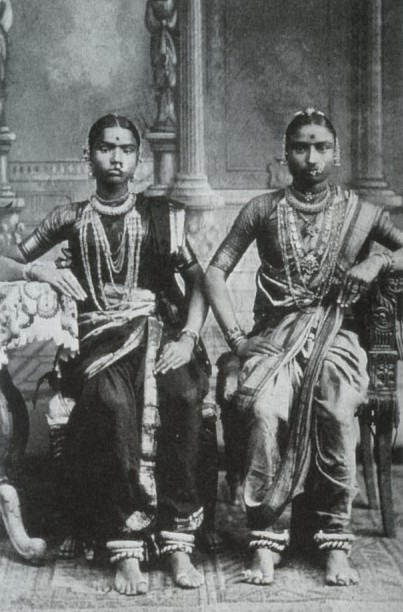
Traditionally the young devadasi underwent a ceremony of dedication to the deity of the local temple which resembled in its ritual structure the upper caste Tamil marriage ceremony.

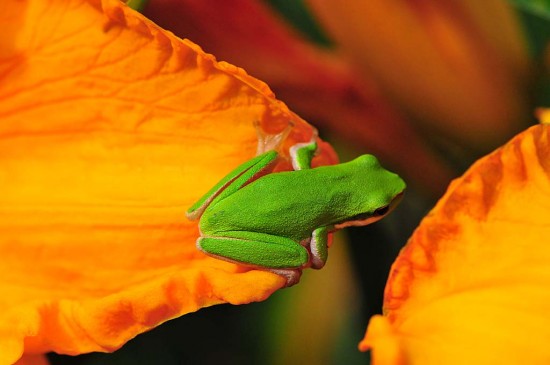
Macro Photography-best Represented through Insects.

Macro photography is one of the most attractive ,amazing ,exciting and popular forms of photography.Macro photography opens up the doors of a new and unique world. It captures minute details of the subjects – The world of macro photography holds many delights and is an area that cannot be appreciated with the human naked eye.

15 Amazing Creativity on Foods.

Have you ever imagined that,the normal fruits and vegetables that we have everyday in our day to day life can be used to create some unique and awesome creations,which is so funny as well as interesting .You can't imagine unless you check it yourself.

Showing posts with label history. Show all posts

Sunday, January 30, 2011

Devadasi - an Ancient Evil...........

Devadasis
In Hinduism, the devadasi tradition is a religious tradition in which girls are "married" and dedicated to a deity or to a temple. Originally, in addition to this and taking care of the temple and performing rituals, these women learned and practiced Bharatanatyam, Odissi and other classical Indian artistic traditions and enjoyed a high social status. The devadasi system was outlawed in all of India in 1988.
During British rule, kings who were the patrons of temples and temple arts became powerless. As a result, devadasis were left without their traditional means of support and patronage. Colonial views on devadasis are hotly disputed by several groups and organizations in India and by western academics.

Devadasi System 

Traditionally the young devadasi underwent a ceremony of dedication to the deity of the local temple which resembled in its ritual structure the upper caste Tamil marriage ceremony. Following this ceremony, she was set apart from her non-dedicated sisters in that she was not permitted to marry and her celibate or unmarried status was legal in customary terms. Significantly, however she was not prevented from leading a normal life involving sex with individuals of her choice and childbearing. The very rituals which marked and confirmed her incorporation into temple service also committed her to the rigorous emotional and physical training in the classical dance, her hereditary profession. In addition, they served to advertise in a perfectly open and public manner her availability for sexual liaisons with a proper patron and protector. Very often in fact, the costs of temple dedication were met by a man who wished thus to anticipate a particular devadasi's favours after she had attained puberty. It was crucially a women's 'dedicated' status which made it a symbol of social prestige and privilege to maintain her.
Source
The Reason for the Prevalence of the Devadasi system.
In the days of yore ,devadasis were trained in the performing arts like Bharatnatyam and they were looked after by the temple authorities and rich patrons.courtesans who could live a life of comfort and complishment.When they became older they were not abandoned as they still had their art which they could teach younger girls.However with the passage of time .reformers sought to abolish this practice nad successfully imposed legal restriction which were supposed to annihilate it completely.
            Unfortunately , things did not turn out as expected.People felt that religious sanction exonerated them from legal offences and continue to practice it secretly.Small temples have become the preferred venues for this practice.In this day and age , the devadasi is not an accomplished courtesan but a prstitute with no means of looking after herself.Her life is one of abject poverty , sexual exploitation , constant degradation and ultimate abandonment.
Source: Article in "Women era"


Thursday, January 27, 2011

The Top 10 association football stadiums by seating capacity.

The following is a list of football stadiums. They are ordered by their seating capacity, that is the maximum number of spectators that the stadium can accommodate in seated areas. All stadiums that are the home of a club or national team with a capacity of 40,000 or more are included. That is the minimum capacity required for a stadium to host FIFA World Cup finals matches.
Source
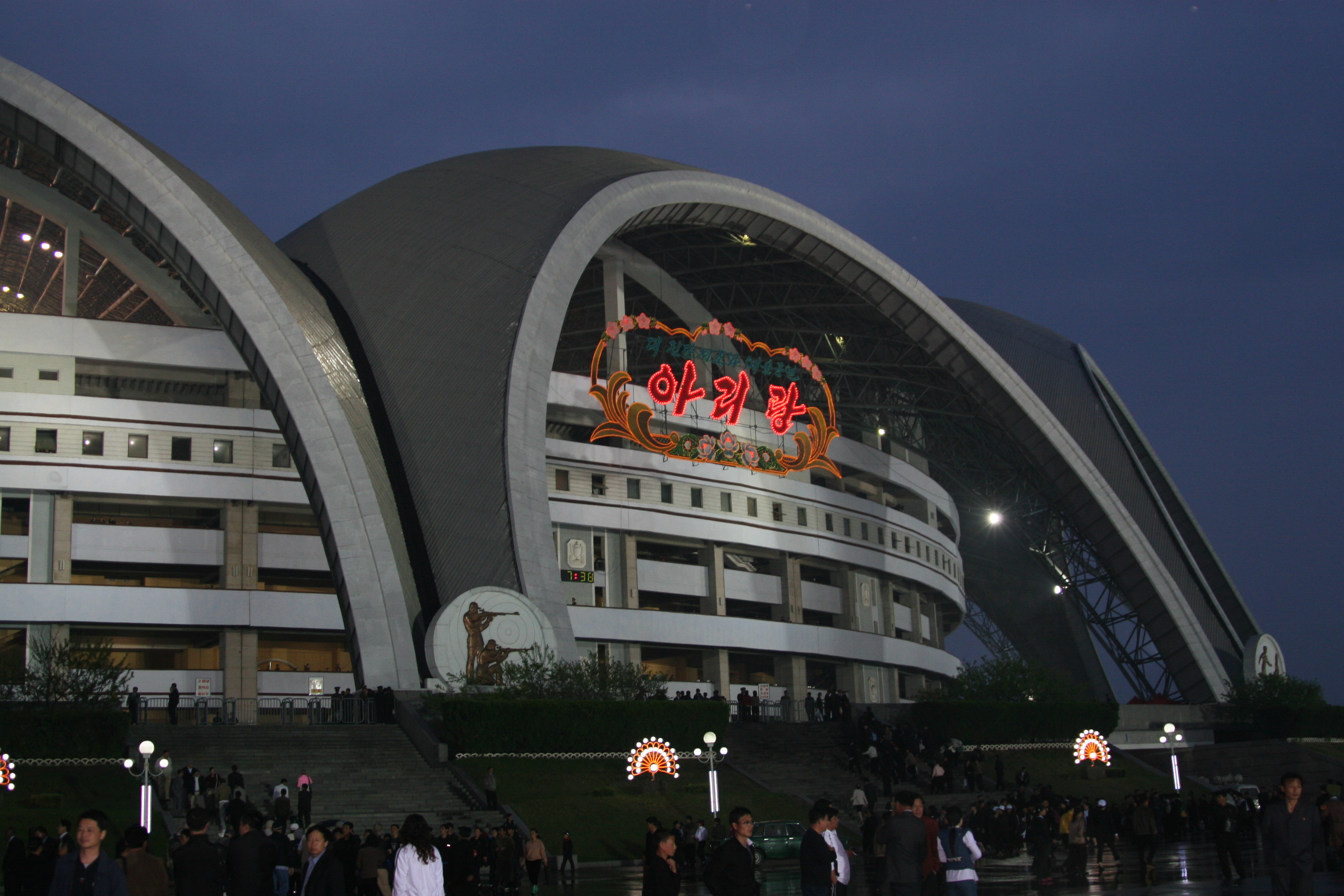
The RÅ­ngrado May First Stadium, or May Day Stadium, is a multi-purpose stadium in Pyongyang, North Korea, completed on May 1, 1989.
Rungrado May Day Stadium

The stadium was constructed as a main stadium for the 13th World Festival of Youth and Students in 1989. It is currently used for football matches, a few athletics matches, but most often for Arirang performances (also known as the Mass Games). The stadium can seat 150,000, which is the largest stadium capacity in the world and the 12th world largest sporting venue.While the stadium is used for sporting events, it is most famous as the site of massive performances and shows celebrating Kim Il-sung and the North Korean nation. In June–July 2002 it was the site of the colossal and meticulously choreographed "Arirang" gymnastic and artistic performance (often referred to elsewhere as "mass games").
Salt Lake Stadium

Yuva Bharati Krirangan commonly known as Salt Lake Stadium, is a multi-purpose stadium in Bidhannagar, Kolkata, West Bengal.The stadium is the second largest non-auto racing stadium in the world and the largest in the Indian sub-continent. It is currently used for football matches and athletics. The stadium was built in 1984 and holds 120,000[1] people in a three-tier configuration.
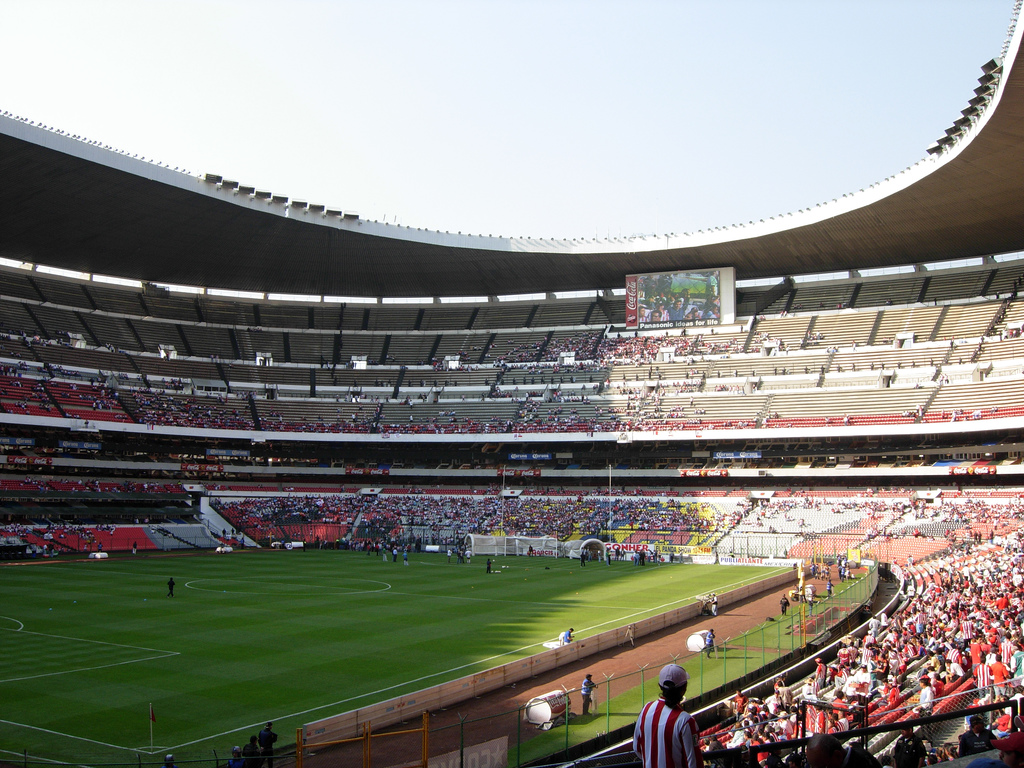
Estadio Azteca
Estadio Azteca is a stadium in Santa Ursula, Mexico City, Mexico. It is the official home stadium of the Mexico national football team and the Mexican team Club América.The stadium was the venue for football soccer in the 1968 Summer Olympics .In the 1970 final Brazil defeated Italy 4:1 and in 1986 Argentina defeated West Germany 3:2 (both finals produced five goals). It also hosted the 1986 quarter-final between Argentina and England in which Diego Maradona scored both the "Hand of God goal" and the "Goal of the Century". The stadium also hosted the "Game of the Century", when Italy defeated West Germany 4-3 in extra time in one of the 1970 semifinals. With a capacity of 105,000, it is the largest stadium in Latin America, sixth largest in the world and largest soccer purpose-built stadium outside of Asia.
Bukit Jalil National Stadium
Bukit Jalil National Stadium in Bukit Jalil, located in the National Sports Complex to the south of the capital city of Malaysia Kuala Lumpur, is a 87,411 capacity all-seater, multi-purpose stadium that was built in 1998 to host the 1998 Commonwealth Games. It also served as the main stadium of the 2001 Southeast Asian Games. The Bukit Jalil's capacity makes it the 25th largest stadium in the world and the 10th Biggest Football Stadium.The stadium is considered the best stadium in Malaysia and is home of the Malaysian national football team. Initially built for the1998 Commonwealth Games, the stadium is now used for a variety of events, most recently being one of the venues for the AFC Asian Cup 2007.
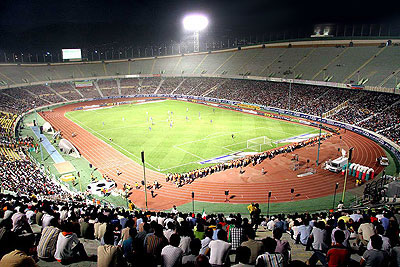
Azadi Stadium

The Azadi Stadium formerly Aryamehr Stadium is Iran's national stadium and the largest in the country. The Azadi stadium officially has a capacity of 100,000 people [3][4] and was built to host the 1974 Asian Games. The stadium is part of the much larger Azadi Sports Complex, and is surrounded by a rowing river, football training pitches, a weightlifting complex, swimming facilities and indoor volleyball and futsal courts, among many other amenities. Azadi Stadium is the fourth biggest association football stadium in the world, third in Asia and first in the Middle East.Azadi Stadium hosts most of Iran's national games, and is the home arena for Persepolis F.C. and Esteghlal F.C. in the Iran Pro League.
Camp Nou


Camp Nou (Catalan pronunciation: [ˈkam ˈnÉ”w], “New Field”), often erroneously called “the Nou Camp” in English, is a football stadium in Barcelona, Spain The stadium, located in the west of the city, has been the home of FC Barcelona since its construction in 1957. It has hosted numerous international matches at a senior level including two UEFA Champions League finals, the most recent being in 1999. It seats 99,354, making it the largest stadium in Europe and the fourteenth largest in the world in terms of capacity. Its official name was Estadi del FC Barcelona (FC Barcelona Stadium) until 2000, when the club members voted to formally adopt the popular nickname Camp Nou. It held UEFA five-star status until that rating was superseded by a new system of classification in 2006 in which the Camp Nou is now an elite stadium.
FNB Stadium
FNB Stadium, known as Soccer City during the 2010 FIFA World Cup, is a stadium located in Nasrec, the Soweto area of Johannesburg, South Africa. It is located next to the South African Football Association headquarters (SAFA House) where both the FIFA offices and the Local Organising Committee for the 2010 FIFA World Cup were housed. Designed as the main association football stadium for the World Cup, the FNB Stadium became the largest stadium in Africa with a capacity of 94,700, However its maximum capacity during the 2010 FIFA World Cup was 84,490 due to reserved seating for the press and other VIP's. The stadium is also known by its nickname "The Calabash" due to its resemblance to the African pot or gourd.

It was the site of Nelson Mandela's first speech in Johannesburg after his release from prison. It was also the site of Chris Hani's funeral.


Wembley Stadium

Wembley Stadium is a football stadium located in Wembley Park, in the London Borough of Brent, England, which opened in 2007 on the site of the previous 1923 structure. The 90,000 capacity venue is the second largest stadium in Europe, and serves as England's national stadium. It is the home venue of the England national football team, and hosts the latter stages of the top level domestic club cup competition, the FA Cup. I
Bung Karno Stadium

Gelora Bung Karno Stadium, officially Gelora Bung Karno Main Stadium (Stadion Utama Gelora Bung Karno, formerly Gelora Senayan Main Stadium) is a multi-use stadium in Senayan, Central Jakarta, Indonesia. It is named after Sukarno, Indonesia's first President. It is mostly used for football matches.
Borg El Arab Stadium


The Egyptian Army Stadium or Borg El Arab Stadium is a stadium commissioned in 2006 in the Mediterranean Sea resort of Borg el Arab; 50 km west of Alexandria, Egypt. It is the largest stadium in Egypt and the second largest in Africa (the first being Soccer City in Johannesburg) with a capacity of 86,000 and is an all-seater. It is also the 27th largest stadium in the world, and the 10th largest association football stadium in the world. It is located on the Cairo-Alexandria desert highway 10 km from Borg El Arab Airport and 15 km from Alexandria's city centre. A running track runs around the pitch, and the ground has four large floodlights. Only one stand is covered by a roof.
The whole post is an extract from the Source Wikipedia.


Wednesday, January 26, 2011

Rock Cut Temples in India

Ananta Padmanabha Swami Temple
Rock-cut architecture is the practice of creating buildings and other physical structures by carving natural rock. In India the term 'cave' is often applied, and in China 'cavern,' but one must differentiate natural caves from rock-cut architecture which is man-made and designed along the conventions of architecture itself and thus in every respect a part of architecture and its history. Though rock-cut architecture differs from traditional architecture in many obvious ways, many rock cut structures are often made to replicate traditional architectural forms in the facades and even in their interiors. The interiors were usually carved out by starting at what would wind up being the roof and then working downward, for the obvious reason that stones would not be falling on one's head. The three main uses of rock-cut architecture were temples (like those in India), tombs (like those in Petra, Jordan) and cave dwelling (like those in Cappadocia, Turkey).Rock-cut architecture is also said to be cut, hewn, etc., "from the living rock".
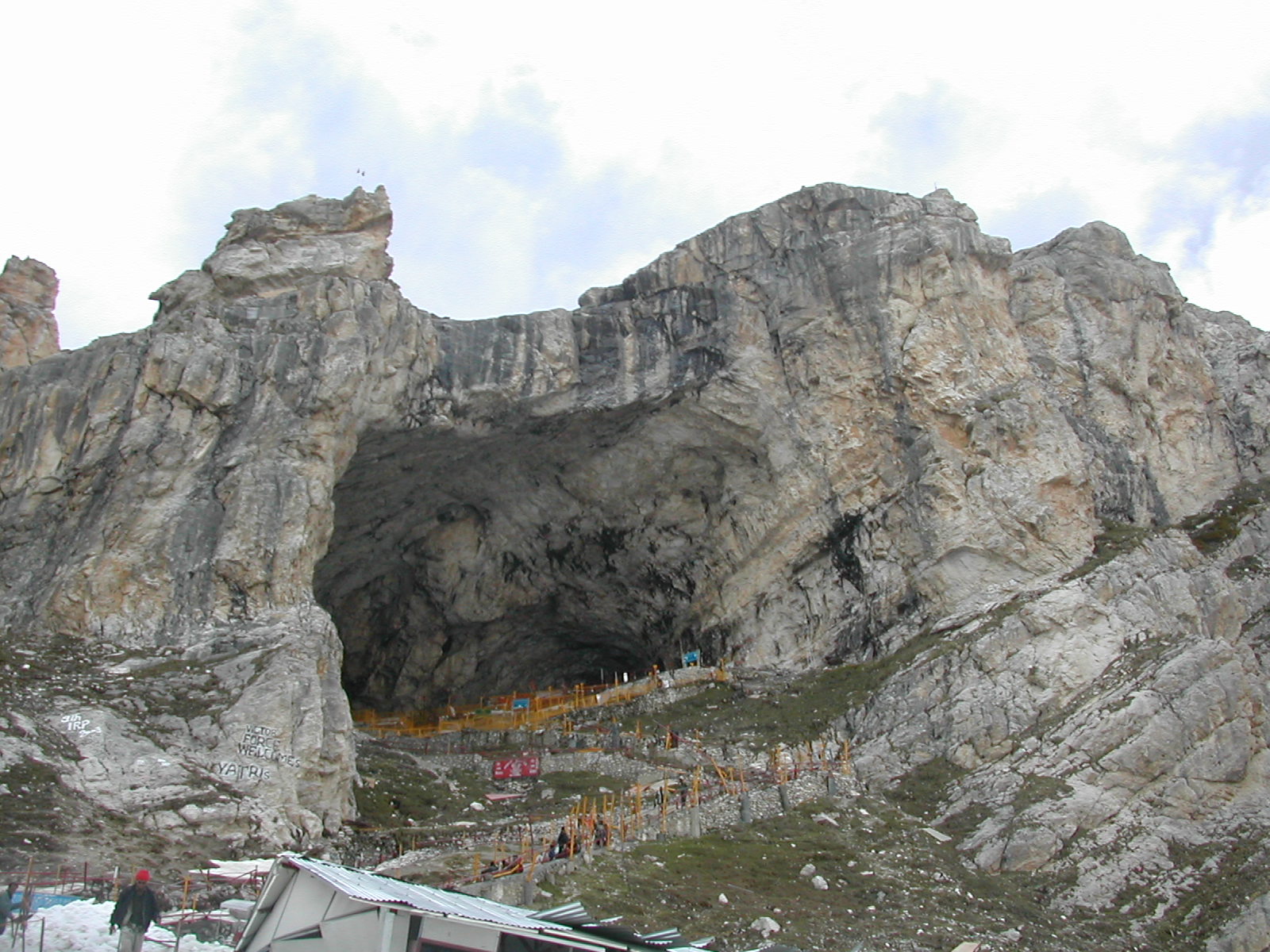
Amarnath
The Amarnath caves are one of the most famous shrines in Hinduism, dedicated to the god Shiva, located in the Indian state of Jammu and Kashmir. The shrine is claimed to be over 5,000 years old and forms an important part of Hindu mythology.Inside the main Amarnath cave lies an ice  stalagmite resembling the Shiva Linga, which waxes during May to August and gradually wanes thereafter.This lingam is said to grow and shrink with the phases of the moon, reaching its height during the summer festival.According to Hindu mythology, this is the cave where Shiva explained the secret of life and eternity to his divine consort Parvati. Two other ice formations represent Parvati and Shiva's son, Ganesha.
Ajanta Cave
The Ajanta Caves in Maharashtra, India are 31 rock-cut cave monuments which date from the 2nd century BC. The caves include paintings and sculptures considered to be masterpieces of both Buddhist religious art (which depict the Jataka tales) as well as frescos which are reminiscent of the Sigiriya paintings in Sri Lanka.The caves were built in two phases starting around 200 BC, with the second group of caves built around 600 AD.


Barabar Cave
The Barabar Caves are the oldest surviving rock-cut caves in India , mostly dating from the Mauryan period (322–185 BCE), and some with Ashokan inscriptions, located in the Jehanabad District of Bihar, India, 24 km north of Gaya.These caves are situated in the twin hills of Barabar (four caves) and Nagarjuni (three caves) - caves of the 1.6 km distant Nagarjuni Hill sometimes are singled out as Nagarjuni Caves. These rock-cut chambers date back to the 3rd century BC, Maurya period, of Ashoka (r. 273 BC to 232 BC.) and his son, Dasaratha.
 
Khandagiri Udayagiri
Udayagiri and Khandagiri Caves are partly natural and partly artificial caves of archaeological, historical and religious importance near the city of Bhubaneswar in Orissa, India. The caves are situated on two hills Udayagiri and Khandagiri, mentioned as Kumari Parvat in Hathigumpha inscription and face each other across the road. They have a number of finely and ornately carved caves. It is believed that most of these caves were carved out huge residential blocks for the Jain monks, during the reign of King Kharavela. Udayagiri meaning Sunrise Hill, has 18 caves while Khandagiri has 15 caves.

Mahabalipuram
Mahabalipuram was a 7th century port city of the South Indian
dynasty of the Pallavas around 60 km south from the city of Chennai in Tamil Nadu. The name Mamallapuram is believed to have been given after the Pallava king Narasimhavarman I, who took on the epithet Maha-malla (great wrestler), as the favourite sport of the Pallavas was wrestling. It has various historic monuments built largely between the 7th and the 9th centuries, and has been classified as a UNESCO World Heritage Site.--


The historical village Mahendravadi owes its origin to Pallava:Mahendra Varman I (AD 580–630). According to an inscription in Pallava grantha this cave temple was excavated by Gunabhara on the bund of a large tank called Mahendra thataka in the city of Mahendrapura. The cave temple is formed by completely scooping out a large free standing boulder. Now the Garbagraha has an image of Narasimha.

Mahendravadi

The contribution of the Pallavas  to the cultural development was significant. They had also encouraged the growth of Tamil and Sanskrit literature. The Pallavas had earned name and fame through their magnificent art and architecture. We know that Mamallapuram finds a prominent place in the tourist map of the world. Even today, their temples and sculptures stand testimony to the cultural achievements of the Pallavas.
.
The Whole content is taken from Wikipedia.

Wednesday, January 19, 2011

Mata Hari the Accused Spy of First World War .

Mata Hari was the stage name of Margaretha Geertruida "Grietje" Zelle MacLeod (7 August 1876, Leeuwarden – 15 October 1917, Vincennes), a Dutch exotic dancer, courtesan, and accused spy who, although possibly innocent, was executed by firing squad in France for espionage for Germany during World War I.

Mata Hari was also a successful courtesan, though she was known more for her sensuality and eroticism rather than for striking classical beauty. She had relationships with high-ranking military officers, politicians, and others in influential positions in many countries, including Frederick William Victor Augustus Ernest, the German crown prince,who paid for her luxurious lifestyle.

Her relationships and liaisons with powerful men frequently took her across international borders. Prior to World War I, she was generally viewed as an artist and a free-spirited bohemian, but as war approached, she began to be seen by some as a wanton and promiscuous woman, and perhaps a dangerous seductress.

Double agent

During World War I, the Netherlands remained neutral. As a Dutch subject, Margaretha Zelle was thus able to cross national borders freely. To avoid the battlefields, she travelled between France and the Netherlands via Spain and Britain, and her movements inevitably attracted attention. She was a courtesan to many high-ranking allied military officers during this time.On one occasion, when interviewed by British intelligence officers, she admitted to working as an agent for French military intelligence, although the latter would not confirm her story. It is unclear if she lied on this occasion, believing the story made her sound more intriguing, or if French authorities were using her in such a way, but would not acknowledge her due to the embarrassment and international backlash it could cause.

Trial and execution

On 13 February 1917, Mata Hari was arrested in her room at the Hotel Plaza Athénée in Paris. She was put on trial, accused of spying for Germany and consequently causing the deaths of at least 50,000 soldiers. She was found guilty and was executed by firing squad on 15 October 1917, at the age of 41.

Georges Ladoux had been responsible for recruiting Mata Hari as a French spy and later was arrested for being a double agent himself. The facts of the case remain vague, because the official case documents regarding the execution were sealed for 100 years, although, in 1985, biographer Russell Warren Howe managed to convince the French Minister of National Defense to break open the file, about 32 years early. It was revealed that Mata Hari was innocent of her charges of espionage.

Disappearance and rumours

Mata Hari's body was not claimed by any family members and was accordingly used for medical study. Her head was embalmed and kept in the Museum of Anatomy in Paris, but in 2000, archivists discovered that the head had disappeared, possibly as early as 1954, when the museum had been relocated. Records dated from 1918 show that the museum also received the rest of the body, but none of the remains could later be accounted for.

The fact that a former exotic dancer had been executed as a spy immediately provoked many unsubstantiated rumours. One is that she blew a kiss to her executioners, although it is possible that she blew a kiss to her lawyer and former lover Edouard Clunet, present at the execution. Her dying words were purported to be "Merci, monsieur". Another rumour claims that, in an attempt to distract her executioners, she flung open her coat and exposed her naked body. "Harlot, yes, but traitor, never," she is reported to have said. A 1934 New Yorker article, however, reported that at her execution she actually wore "a neat Amazonian tailored suit, specially made for the occasion, and a pair of new white gloves" though another account indicates she wore the same suit, low-cut blouse and tricorn hat ensemble which had been picked out by her accusers for her to wear at trial, and which was still the only full, clean outfit which she had along in prison.Neither description matches photographic evidence. According to an eyewitness account by British reporter Henry Wales, she was not bound and refused a blindfold. Wales records her death, saying that after the volley of shots rang out "...Slowly, inertly, she settled to her knees, her head up always, and without the slightest change of expression on her face. For the fraction of a second it seemed she tottered there, on her knees, gazing directly at those who had taken her life. Then she fell backward, bending at the waist, with her legs doubled up beneath her..." A non-commissioned officer then walked up to her body, pulled out his revolver, and shot her in the head to make sure she was dead.

The topic is taken form the source:-Wikipedia.